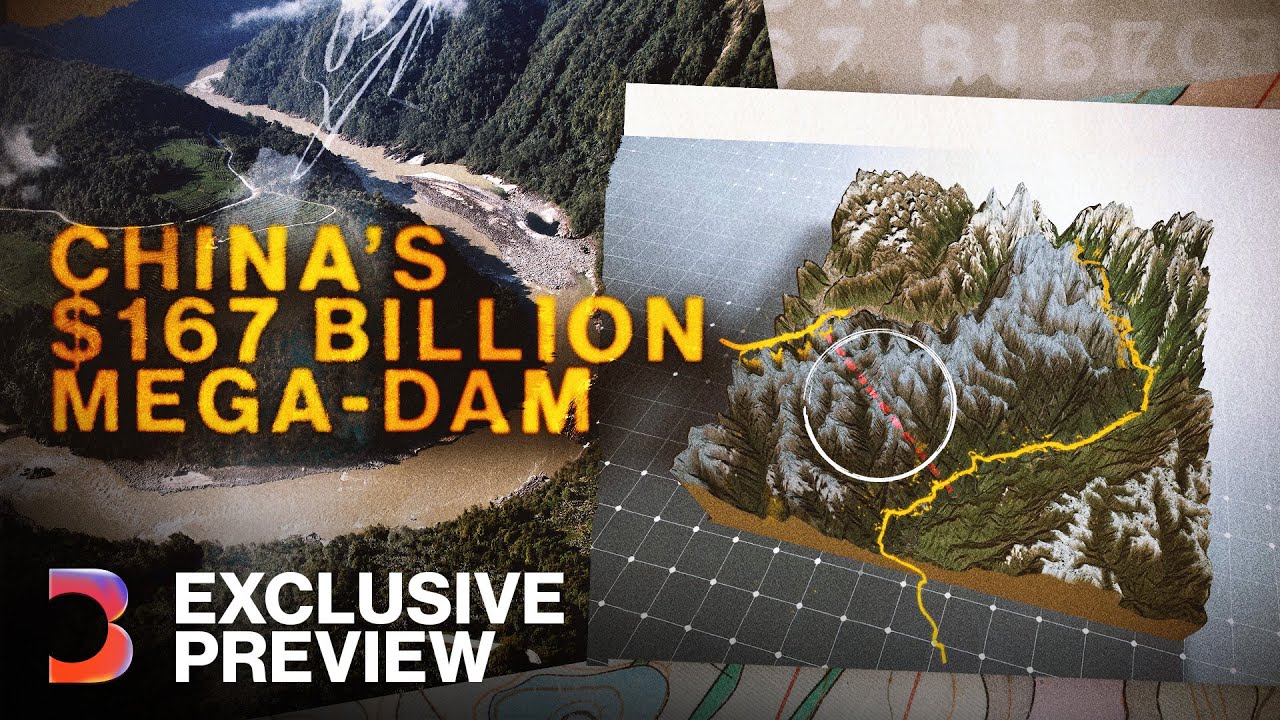
BEIJING — For decades, the Three Gorges Dam has stood as a symbol of China's engineering prowess, generating more electricity than any other power plant on Earth and making days 0.06 microseconds longer, according to NASA. However, China is now planning an even more ambitious project on the Yarlung Tsangpo River, a waterway that flows through the Himalayas and into neighboring India and Bangladesh.
The proposed Yaxia, or Lower Yarlung Hydropower Project, is being hailed as the "project of the century" and the most impressive power generation system ever envisioned. Located at the Great Bend, where the river takes a sharp 180-degree turn and drops 2,000 meters in elevation over a 50-kilometer stretch, the project aims to harness the river's immense hydropower potential. The gorge at the Great Bend is the biggest canyon in the world, three times deeper and slightly longer than the Grand Canyon in Arizona, making it an ideal location for hydroelectric power generation.
According to the Chinese government, the project will have an installed capacity of 60 gigawatts, making it the world's largest individual source of energy. It is expected to generate approximately 300 billion kilowatt hours of electricity per year, more than the entire United Kingdom uses in a year and three times more than the Three Gorges Dam. The project's sheer scale and complexity have been likened to a mission to Mars, with engineers tasked with tunneling through mountains that are still rising and diverting the river through underground tunnels and turbines.
The project's design is still largely unknown, with analysts relying on social media, state television, and satellite images to piece together its details. However, it is believed that the project will consist of a series of hydropower stations along the river, including a large upstream dam with a reservoir to regulate water flow and a smaller dam at the top of the gorge to divert water through the mountains. The diverted water will then pass through underground tunnels and turbines before entering another smaller re-regulation dam at the bottom of the gorge, stabilizing the flow before the river continues downstream into India.
The engineering feat is unprecedented, with the volume of water to be diverted similar to the discharge of a medium-sized river, such as the Rhine in Europe. While the concept has been tested at the Jinping Dams, the scale and remote location of the Yaxia project make it a unique challenge. "The water flow will be similar to the discharge of a medium-sized river," said an engineer involved in the project. "It's a concept already tested at the Jinping Dams, where engineers diverted the river through the mountains. But what is really novel about this project is just its sheer scale, where many engineers would've probably not believed that building such a project in such a remote location would be even possible."
The project's impact extends beyond China's borders, with hundreds of millions of lives downstream in India and Bangladesh potentially affected by the diversion of the river. The project has the potential to exacerbate existing tensions over water resources, making it a sensitive issue for regional diplomacy. As construction on the project officially began in July 2025, the world will be watching to see if China can successfully execute its most ambitious engineering project to date.
In conclusion, the Yaxia hydropower project is a testament to China's engineering ambitions and its determination to dominate the global energy landscape. While the project's scale and complexity pose significant challenges, its potential to generate clean and sustainable energy is undeniable. As the project progresses, the international community will be closely monitoring its impact on the environment, regional relations, and the global energy market.
